

Under the TPACK framework, effective technology-enhanced teaching requires more than learning how to operate devices. It depends on the thoughtful integration of technological, pedagogical, and content knowledge. Teachers need repeated opportunities to practice in real classrooms, receive feedback, examine evidence with colleagues, and refine their instructional design before technology investment can translate into better learning.
The TEAM Model Smarter Education support system connects educational theory, HiTeach classroom interaction and learning evidence, AI Sokrates analytics and feedback, expert guidance, and professional learning communities. HiTeach helps teachers enact and document technology-supported learning; AI Sokrates converts those classroom records into interpretable indices, event frequencies, video markers, and reports. Together, they move Continuous Professional Development (CPD) beyond one-off workshops toward an evidence-informed, scalable, and sustainable growth process.
 Figure 1. Effective smart teaching integrates technology, pedagogy, and disciplinary content.
Questioning, response, charts, Pick-Out, scoring, Push, tasks, and assessment support face-to-face, online, and blended classrooms.
Automatically identify technology and pedagogy patterns, then generate indices, frequencies, timeline clips, and reports for each lesson.
Teachers and experts use lesson videos, AI markers, and observation records to co-plan, review practice, and build shared instructional knowledge.
The following tools and strategies can be introduced in stages or connected as one continuous cycle: learn, practice, receive AI feedback, inquire with colleagues, and apply new insights in the next lesson.

The TEAM Model Smarter Education support system is backed by experienced trainers who understand both HiTeach and the realities of classroom implementation. For schools introducing one-to-one devices, shared-device models, or smart classrooms, practitioner-led training and workshops help teachers connect system functions with instructional purposes and move more quickly from “I can operate it” to “I can design and facilitate learning with it.”
 Figure 2. Schools can arrange training and workshops led by experienced smart-teaching practitioners.
Because HiTeach supports face-to-face, online, and blended learning, online training can model the environment teachers will later facilitate. Participants can experience Web IRS from the student perspective while following the trainer's operation of teacher-side HiTeach. For in-person workshops, using both a laptop and a tablet or smartphone provides the most complete hands-on experience across teacher and student workflows.
 Figure 3. Dual-device participation lets teachers experience both teacher-side HiTeach and student-side Web IRS.
AI Sokrates Summary Notice is a data service within AI Sokrates. After a teacher completes an interactive lesson with HiTeach, the system automatically sends the lesson's Technology Interaction (T) Index and Technology Function Triggered Times to the teacher's HiTA 5 app. Teachers can immediately see their technology-use patterns, function combinations, and current level of fluency without waiting for a formal classroom observation.
HiTeach generates meaningful classroom evidence. As teachers use Pop Quiz, Show Chart, Pick-Out, Scoreboard, Push, and more than 20 interaction modules, the system records how those functions are combined during instruction.
AI Sokrates converts evidence into actionable feedback. It analyzes effective combinations and generates a T Index from 0 to 99, helping teachers identify the next feature or instructional sequence to strengthen.
 Figure 4. HiTeach classroom interaction data flows into AI Sokrates analysis and returns to the teacher through HiTA 5.
 Figure 5. Teachers can view the T-index signal on the HiTA 5 home screen and open detailed frequency summaries in Messages.
Many AI-enabled schools create staged professional-learning plans and skills checklists. Examples from Taiwan include a five-level “mountaineering” plan at Dayou Junior High School, a six-level development challenge at Guangming Junior High School, and a five-level smart-teaching initiative at Wenhua Elementary School. AI coaching makes such school-based programs more evidence-informed: after teachers practice independently, they can use T-index signals and feature-frequency data to track progress toward natural, purposeful technology integration.
 Figure 6. The T Index reflects effective combinations of HiTeach interaction features.
Further reading: Understanding the Technology Interaction (T) Index

The AI Sokrates Practice Training Platform applies AI to hands-on teacher development. Schools, organizations, and professional communities using HiTeach can provide trainees with immediate teaching-behavior evidence after each practice session, together with a complete lesson video and automatically identified clips. Teachers no longer have to rely only on memory; they can review, compare, and refine their practice using observable evidence.
The complete mechanism connects training-authorized HiTeach, student-side Web IRS, AI Sokrates lesson recording and observation records, and the Sokrates Digital Lesson Observation Platform. Participants learn through workshops or self-study resources, use the S button to record a practice lesson, submit evidence according to training requirements, and receive expert review grounded in the lesson record.
 Figure 7. HiTeach practice, lesson recording, and AI Sokrates analysis form an integrated hands-on training mechanism.
 Figure 8. A continuous process from guided learning and practice to AI analysis and expert review.
Process guide: AI Sokrates Practice Training Platform Operating Process
AI-supported lesson study uses HiTeach classroom evidence, an AI-enabled recording terminal, and AI Sokrates to support lesson observation, professional dialogue, and feedback. During an observed lesson, the platform collects expert markers and AI-generated markers at the same time. After class, the complete lesson record is saved to the Digital Lesson Observation Platform, allowing professional dialogue to move beyond fragmented notes and memory toward shared video, timelines, and quantitative evidence.
 Figure 9. HiTeach lesson records, AI Sokrates analytics, and expert observation combine to support evidence-informed lesson study.
The platform can generate five major evidence sets: Sokrates Video, Sokrates Report, Lesson Observation Record, My Sokrates, and an Excel lesson-review report. Professional teams can use this evidence in eight practical ways:
Use a one-minute overview to understand technology interaction, pedagogy patterns, and event frequencies.
Look for balanced use, purposeful combinations, and closed-loop instructional sequences.
Open timestamp links to locate where specific pedagogical features occurred in the lesson video.
Position lesson indicators against global reference data and set measurable school-based inquiry goals.
Use clusters of positive and suggestion markers to focus dialogue on high-value moments.
Review lesson context, expert markers, AI reports, norms, e-notes, teaching materials, and lesson plans together.
Export AI and expert-marker data for deeper analysis in Excel or qualitative research tools such as NVivo.
Manage personal lesson cases, markers, channels, observation records, and notifications in one dashboard.
 Figure 10. Multiple layers of evidence support focused, efficient, and repeatable professional inquiry.
Related resources: Digital Lesson Observation Series 1: Pedagogical Review with AI Sokrates | DLO AI Ultimate Plan
With AI-supported lesson study, schools can organize same-design lesson inquiry (Homogeneous Pedagogy Lesson), collaborative analysis of video clips, or cross-school comparison of different designs for the same topic (Heterogeneous Pedagogy Lesson). Chengdu Normal Yindu Wisteria Primary School, for example, has used collaborative clip analysis and shared lesson designs, while international Master Cup exchanges have enabled teachers to compare how the same English lesson is enacted in different classrooms.
 Figure 11. Master Cup exchanges compare different enactments of the same lesson through shared video and evidence.

A Professional Learning Community (PLC) gives teachers a structure for developing shared beliefs, goals, and practices around smart teaching. At the Affiliated Experimental Elementary School of the University of Taipei (ESUT), teachers have sustained a smart-teaching PLC and established a dedicated Digital Lesson Observation classroom. AI Sokrates automatically archives public lessons, observation evidence, and data-rich lesson cases for continued professional inquiry.
When HiTeach and AI Sokrates become part of PLC routines, dialogue can move beyond “I thought the lesson went well” toward evidence-based questions: Which interaction increased participation? Which sequence should be retained? Where does the data suggest a need for redesign? Strong lesson cases can also become school-based professional assets for onboarding, interdisciplinary planning, and cross-school exchange.
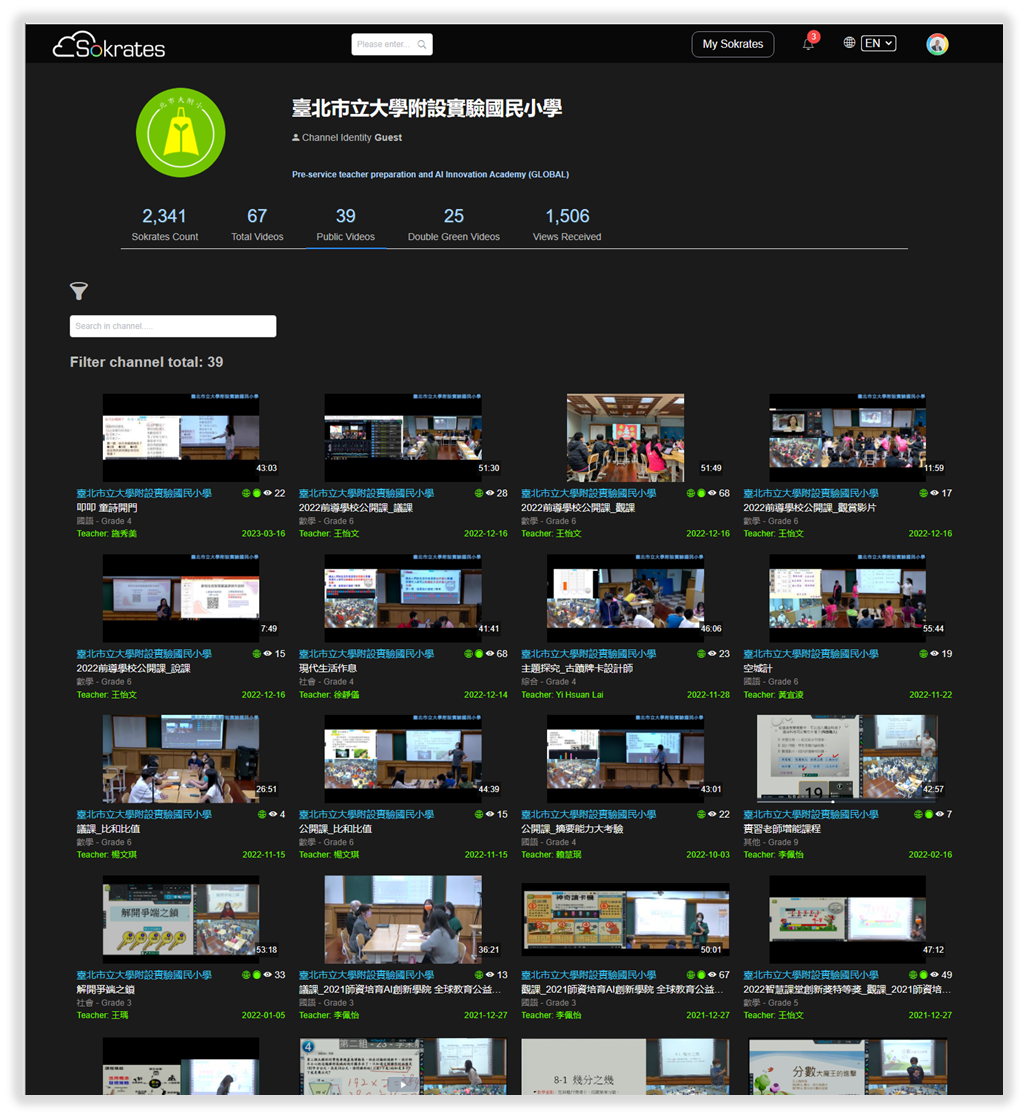 Figure 12. ESUT uses Digital Lesson Observation and a shared lesson channel to sustain its professional learning community.
The greatest value of technology-enhanced teaching does not come from adding more tools. It comes from building a professional-learning mechanism that can operate over time. HiTeach helps teachers make interaction, tasks, assessment, and differentiation part of everyday classroom practice. AI Sokrates automatically turns those lesson records into indices, frequencies, clips, reports, and norm-referenced evidence. Together, they allow every lesson to generate evidence of both student learning and teacher professional growth.
For schools and education authorities, the same ecosystem can support staged training, school-based lesson study, PLC development, and cross-school exchange. Teacher empowerment therefore moves beyond attendance hours toward visible improvements in technology fluency, pedagogical sequencing, collaborative inquiry, and the continuous refinement and scaling of effective teaching models.